
Dr. Tamer ABUHMED is a Tenure-track Associate Professor in the College of Computing and Informatics at Sungkyunkwan University (SKKU), where he has served since September 2019. He is the founder and director of the SKKU Information Research Laboratory (InfoLab). Before joining SKKU, he was an Assistant Professor at Inha University, where he also founded the Software Security Research Laboratory (SecLab). He held visiting scholar positions at Loyola University Chicago (Jan 2023 – Jan 2026), the University of Notre Dame (Jun–Aug 2024), and the University of Chicago (Jun–Aug 2023), and serves as a Technology Consultant for the Gyeonggi-Do Province Government, South Korea.
Research Impact
With over 6,200+ citations, an h-index of 35+, and an i10-index of 65+ (Google Scholar), Dr. Abuhmed’s research has demonstrated significant impact in Systems Security and responsible AI. His publication record includes more than 76+ peer-reviewed journal articles and 25+ conference/chapter papers, with citation growth increasing substantially year-over-year.
Research Interests
- Cybersecurity and Systems Security: AI/ML security and robustness, adversarial machine learning, malware analysis and detection, software security analysis, network security, digital forensics, threat intelligence, cyber threat hunting, continuous authentication, secure mobile and IoT platforms, binary analysis, and vulnerability detection.
- Privacy and Trustworthy AI: data privacy, federated learning security, privacy-preserving machine learning, secure multi-party computation, differential privacy, trustworthy AI systems, interpretable security models, visual attention & interpretation models, and interpretable deep learning.
- AI & Data Science for Social Good: expert systems, clinical decision support systems, deep learning for medical diagnosis, medical time-series analysis, multimodal data fusion, risk assessment, and probabilistic modeling.
Education
-
Inha University, Incheon, Republic of Korea (Mar 2007 – Aug 2012)
M.S. and Ph.D. in Computer Engineering
Dissertation: Trustworthy Wireless Sensor Networks Through Software-Based Attestation
Professional Experience
Associate Professor, College of Computing and Informatics
Sungkyunkwan University (SKKU) [Global Rank #87] — Sep 2019 – Present
- Director and Founder of the SKKU Information Research Laboratory (InfoLab)
- Faculty Member: Convergence Security Dept., Forensics Dept., AI System Engineering Dept., Digital Media Communication Engineering Dept.
- Member, Super Sapiens Research Institute Steering Committee
- Technology Consultant, Gyeonggi-Do Province Government, South Korea
Visiting Scholar, Department of Computer Science
Loyola University Chicago — Jan 2023 – Jan 2026
- Member of the AI for Secure Computing Research Lab
- Expert Speaker in the SecureAI Program (Cybersecurity Training for AI Practitioners)
- Research Collaboration in Secure Interpretable AI Systems
Visiting Scholar, Department of Computer Science and Engineering
University of Notre Dame — Jun 2024 – Aug 2024
- Research Collaboration in Software Security
Visiting Scholar, Physical Sciences Division
The University of Chicago — Jun 2023 – Aug 2023
- Research Collaboration in Real-World Medical Diagnostic Challenges
Assistant Professor, Computer Engineering Department
Inha University — Mar 2014 – Sep 2019
- Director and Founder of Software Security Research Laboratory (SecLab)
- Professor, School of Computer Science Engineering, Inha University in Tashkent (IUT)
- Faculty Coordinator/Advisor of the International Student Body
Postdoctoral Researcher / Lecturer, Inha University (Aug 2012 – Feb 2014)
Research Assistant, Information Security Research Laboratory (ISRL), Inha University (Mar 2007 – Aug 2012)
Selected Publications
Security, Trustworthy AI, and Privacy
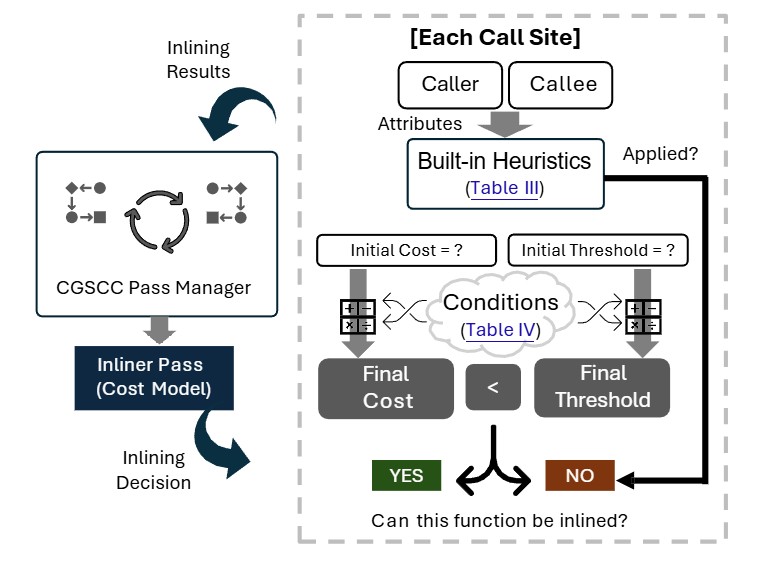
- A Deep Dive into Function Inlining and its Security Implications for ML-based Binary Analysis. Network and Distributed System Security Symposium (NDSS), 2026.
- Infodeslib: Python Library for Dynamic Ensemble Learning using Late Fusion of Multimodal Data. ACM KDD Workshop on Knowledge-infused Learning (KiL’24), 2024.
- AdvChar: Attacking Interpretable NLP Systems. IEEE Transactions on Information Forensics and Security, 2025.
- SingleADV: Single-Class Target-Specific Attack against Interpretable Deep Learning Systems. IEEE Transactions on Information Forensics and Security, 2024.
- Hardening Interpretable Deep Learning Systems: Investigating Adversarial Threats and Defenses. IEEE Transactions on Dependable and Secure Computing, 2023.
- Stealthy Query-Efficient Opaque Attack Against Interpretable Deep Learning. IEEE Transactions on Reliability, 2025.
- Explainable Artificial Intelligence (XAI): What we know and what is left to attain Trustworthy Artificial Intelligence. Information Fusion, 2023.
- Large-scale and robust code authorship identification with deep feature learning. ACM Transactions on Privacy and Security (TOPS), 2021.
- Multi-χ: Identifying Multiple Authors from Source Code Files. Proceedings on Privacy Enhancing Technologies (PETS), 2020.
- Large-scale and Language-Oblivious Code Authorship Identification. ACM SIGSAC Conference on Computer and Communications Security (CCS), 2018.
AI for Healthcare and Biomedical Applications
- MM-DES: Enhancing Multimodal Clinical Prediction with Joint Contrastive Embeddings and Dynamic Ensembles. International Conference on Pattern Recognition (ICPR), 2026.
- Trustworthy Alzheimer’s diagnosis: Integrating robustness, fairness, and explainability in neuroimaging-based deep ensemble framework. Engineering Applications of Artificial Intelligence, 2026.
- Multi-plane multi-slice longitudinal MRI for deep ensemble progression detection based on enhanced residual multi-head self-attention. Knowledge-Based Systems, 2026.
- 4DfCF: 4D fMRI CrossFormer Vision Transformer. IEEE Journal of Biomedical and Health Informatics, 2025.
- Information fusion-based Bayesian optimized heterogeneous deep ensemble model based on longitudinal neuroimaging data. Applied Soft Computing, 2024.
- Alzheimer’s disease diagnosis in the metaverse. Computer Methods and Programs in Biomedicine, 2024.
- Prediction of Alzheimer’s progression based on multimodal deep-learning-based fusion and visual explainability of time-series data. Information Fusion, 2023.
- Explainable machine learning models based on multimodal time-series data for the early detection of Parkinson’s disease. Computer Methods and Programs in Biomedicine, 2023.
- Multitask Deep Learning for Cost-Effective Prediction of Patient’s Length of Stay and Readmission State Using Multimodal Physical Activity Sensory Data. IEEE Journal of Biomedical and Health Informatics, 2022.
- Automatic detection of Alzheimer’s disease progression: An efficient information fusion approach with heterogeneous ensemble classifiers. Neurocomputing, 2022.
Academic Services
Department and College Service
- [Member] Convergence Security Department
- [Member] Forensic Science Department, Digital Forensics
- [Member] College Artificial Intelligence
- [Host & Organizer] Computer Science Seminar
- [Member] Super Sapiens Research Institute
- [Member] Department of Digital Media Communication Engineering
Journal Reviewer & Guest Editor
- IEEE Transactions on Neural Networks and Learning Systems
- IEEE Transactions on Dependable and Secure Computing
- IEEE Transactions on Image Processing
- IEEE Transactions on Cognitive and Developmental Systems
- IEEE Internet of Things Journal
- IEEE Transactions on Mobile Computing
- ACM Transactions on Privacy and Security
- Elsevier: Expert Systems with Applications · Knowledge-Based Systems · Information Fusion
- Human-centric Computing and Information Sciences (HCIS)
Conference Program Committee / Reviewer
- [2026] ICML, NeurIPS
- [2025] IJCAI
- [2025–2026] ASONAM
- [2022–2023] ECAI
- [2020–2021] CSoNet, PETS
- [2019–2020] ACM CCS
Professional Memberships
- IEEE Senior Member & IEEE Computer Society
- ACM — Association for Computing Machinery
- KICS — Korea Information and Communications Society
- KIISC — Korean Institute of Information Security & Cryptology
Teaching
10+ Years of Teaching Experience (Mar 2014 – Present)
Graduate Courses
- Advanced Topics in Machine Learning
- Machine Learning Security and Robustness
- Trustworthy Machine Learning
- Machine Learning Security
- Special Topics on Information Security
- Advanced Data Analysis
- Machine Learning
Undergraduate Courses
- Fundamentals of Machine Learning
- Introduction to Deep Neural Networks
- Capstone Design
- Computer Security
- Theory of Programming Languages
- Java Programming
- Data Communications
- Assembly Language Programming
- Mobile Programming
- Wireless Communication and Networking
Publications (108)
2026
2025
2024
2023